
Spotlight On Our Churches
Take a look inside our churches as the Rev. Mary Anderson, Assistant to the Lead Presbyter, features the people, ministries and stories that make each congregation a vibrant part of our community. Please check back periodically or read Presbytery Matters for new church spotlights.
Amboy Belle Isle
✳︎
United Ministry of Aurora
✳︎
First Presbyterian Church Auburn
✳︎
Westminster Presbyterian Church
✳︎
First Presbyterian Church of Baldwinsville
✳︎
First Presbyterian Church of Cazenovia
✳︎
First Presbyterian Church of Chittenango
✳︎
Collamer United Church
✳︎
First United Church of East Syracuse
✳︎
United Church of Fayetteville
✳︎
First United Church of Fulton
✳︎
Hannibal Community Church
✳︎
Isaiah's Table
✳︎
Jamesville Community Church
✳︎
King Ferry Presbyterian Church
✳︎
The Korean Church of Syracuse
✳︎
Columbian Presbyterian Church
✳︎
Liverpool First Presbyterian Church
✳︎
Marcellus First Presbyterian Church
✳︎
First Presbyterian Church of Mexico
✳︎
Morrisville Community Church
✳︎
New Hope Presbyterian Church
✳︎
Northminster Presbyterian Church
✳︎
Onondaga Hill Presbyterian Church
✳︎
Faith United Church
✳︎
Otisco Presbyterian Church
✳︎
Park Central Church
✳︎
Pebble Hill Presbyterian Church
✳︎
Port Byron Federated Church
✳︎
Robinson Elmwood United Church
✳︎
Scipioville Presbyterian Church
✳︎
Skaneateles Presbyterian Church
✳︎
Sennett Federated Church
✳︎
Weedsport Presbyterian Church
✳︎
Whitelaw Presbyterian Church
✳︎
Amboy Belle Isle ✳︎ United Ministry of Aurora ✳︎ First Presbyterian Church Auburn ✳︎ Westminster Presbyterian Church ✳︎ First Presbyterian Church of Baldwinsville ✳︎ First Presbyterian Church of Cazenovia ✳︎ First Presbyterian Church of Chittenango ✳︎ Collamer United Church ✳︎ First United Church of East Syracuse ✳︎ United Church of Fayetteville ✳︎ First United Church of Fulton ✳︎ Hannibal Community Church ✳︎ Isaiah's Table ✳︎ Jamesville Community Church ✳︎ King Ferry Presbyterian Church ✳︎ The Korean Church of Syracuse ✳︎ Columbian Presbyterian Church ✳︎ Liverpool First Presbyterian Church ✳︎ Marcellus First Presbyterian Church ✳︎ First Presbyterian Church of Mexico ✳︎ Morrisville Community Church ✳︎ New Hope Presbyterian Church ✳︎ Northminster Presbyterian Church ✳︎ Onondaga Hill Presbyterian Church ✳︎ Faith United Church ✳︎ Otisco Presbyterian Church ✳︎ Park Central Church ✳︎ Pebble Hill Presbyterian Church ✳︎ Port Byron Federated Church ✳︎ Robinson Elmwood United Church ✳︎ Scipioville Presbyterian Church ✳︎ Skaneateles Presbyterian Church ✳︎ Sennett Federated Church ✳︎ Weedsport Presbyterian Church ✳︎ Whitelaw Presbyterian Church ✳︎
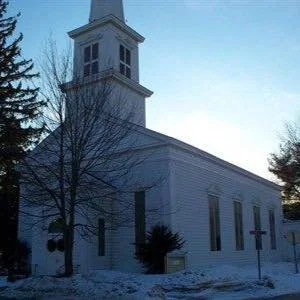
First Presbyterian Church of Mexico
A Legacy Born in a Barn, Led by Seven Women
The story of First Presbyterian Church of Mexico begins in a barn on August 27, 1810, when seven courageous women gathered to form a new worshiping community in what was then a frontier town. All seven had come from New England, bringing with them a deep commitment to faith, education and shared ministry. Their bold beginning is still remembered today in the congregation’s play, The Seven Who Started, and in a sanctuary window dedicated to their witness.
Although the group first organized as a Congregational body, the church did not receive legal standing until 1811 -- at a time when only men could serve as trustees, clerks or moderators. Even so, the women remained the driving force behind the young congregation’s life and mission, a truth the church still proudly claims.
The congregation continued as a Congregational church until March 1818. On April 12th of that year, the first elders were elected, and the church formally joined the Oneida Presbytery, beginning its long Presbyterian identity. Over time, that connection grew into what is now the Presbytery of Cayuga‑Syracuse.
Honoring the faith and determination of those seven founders, the church celebrated its 200th anniversary in August 2010.
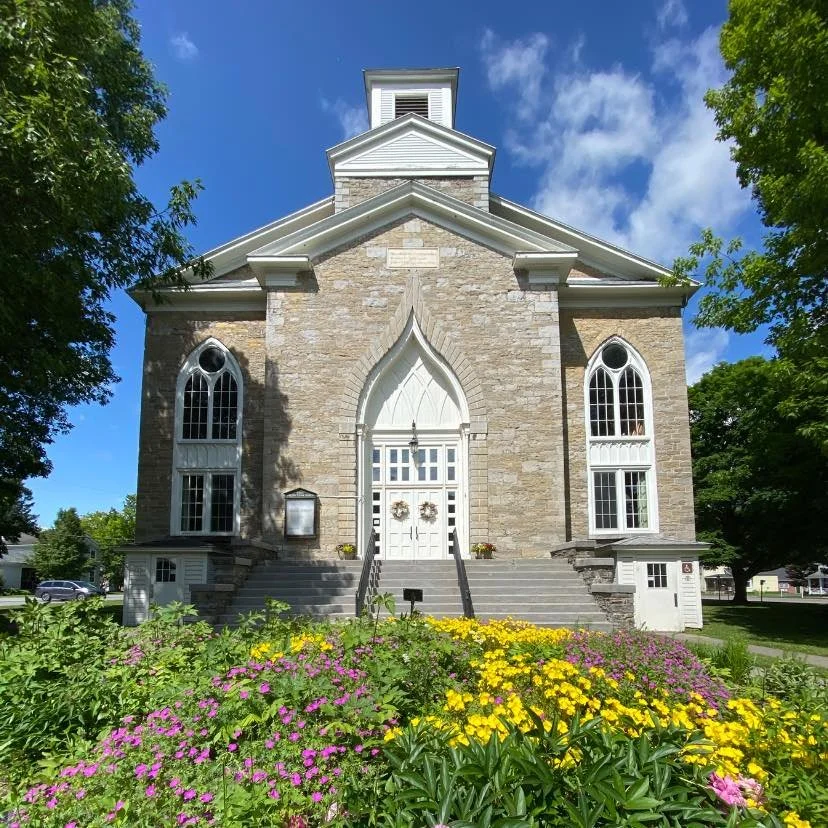
First Presbyterian Church of Chittenango
Rooted in Chittenango: Two Centuries of Faith, Community, and Change
The story of First Presbyterian Church of Mexico begins in a barn on August 27, 1810, when seven courageous women gathered to form a new worshiping community in what was then a frontier town. All seven had come from New England, bringing with them a deep commitment to faith, education and shared ministry. Their bold beginning is still remembered today in the congregation’s play, The Seven Who Started, and in a sanctuary window dedicated to their witness.
Although the group first organized as a Congregational body, the church did not receive legal standing until 1811 -- at a time when only men could serve as trustees, clerks or moderators. Even so, the women remained the driving force behind the young congregation’s life and mission, a truth the church still proudly claims.
The congregation continued as a Congregational church until March 1818. On April 12th of that year, the first elders were elected, and the church formally joined the Oneida Presbytery, beginning its long Presbyterian identity. Over time, that connection grew into what is now the Presbytery of Cayuga‑Syracuse.
Honoring the faith and determination of those seven founders, the church celebrated its 200th anniversary in August 2010.
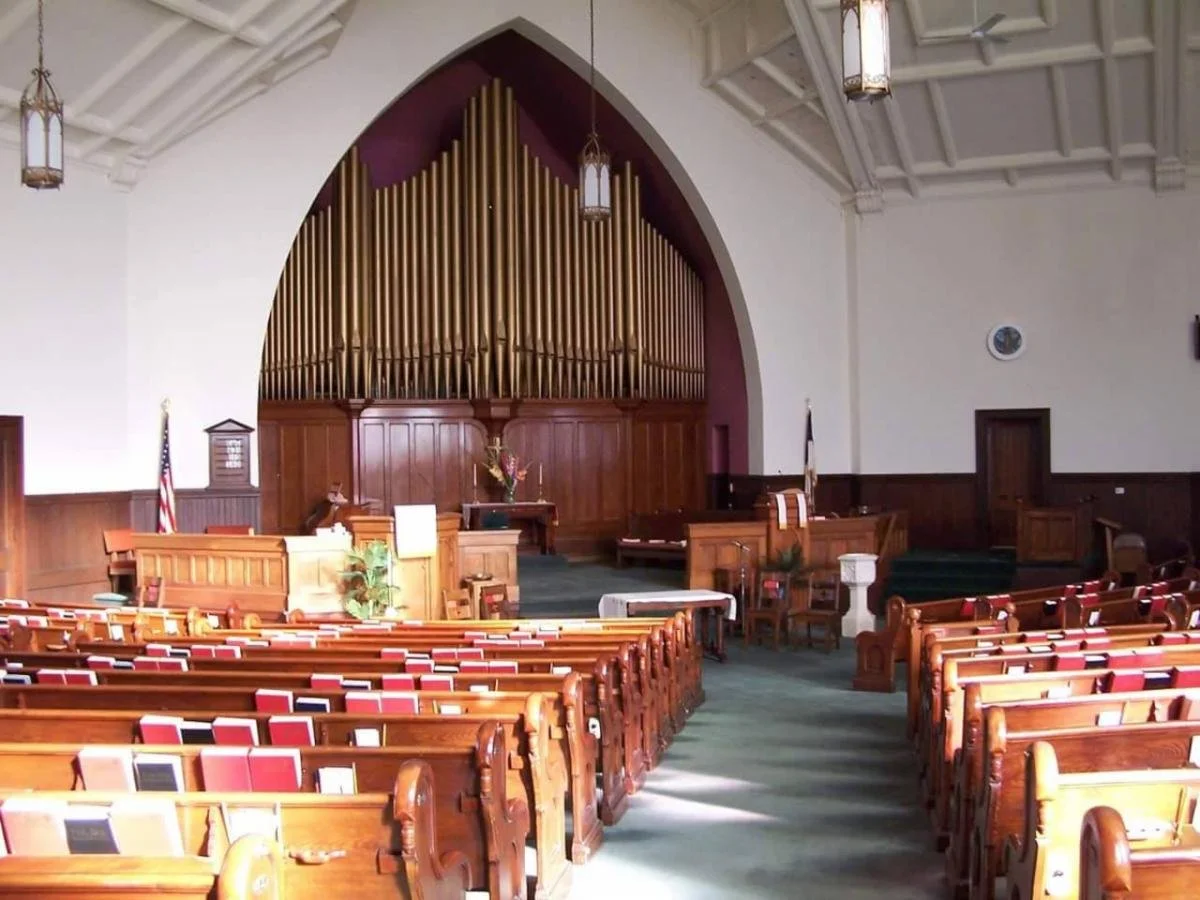
First United Church of Fulton
First United Church of Fulton
Two Churches, One Legacy of Mission and Community Service
For many years in Fulton, two active congregations stood on opposite corners of South Third and Utica Streets: First Baptist Church of Fulton and First Presbyterian Church of Fulton and Granby. By the early 1990s, both churches were facing smaller membership and limited resources. In 1995, after decades of shared Sunday School, summer worship, and joint activities, the two congregations voted to merge. Rev. Al Wollenberg, then Interim Pastor of the Presbyterian Church, guided the process. In 1997, the merger became official, forming First United Church of Fulton, with Rev. David Nethercott (American Baptist) as the first installed pastor.
A Legacy of Mission and Community Service
Both congregations brought strong traditions of mission work. During World War II, members wrote letters to servicemen and women, knitted and sewed for the war effort, and supported global mission relationships in China, Korea, Japan, and beyond.
They hosted Scout troops, helped form the Fulton Council of Churches, and participated in the Men’s Ecumenical Forum of Fulton. Their commitment to justice included actions such as the 1969 boycott of California table grapes in solidarity with farm workers.
Pastoral leadership also shaped their community impact. One pastor helped launch what became Oswego County Opportunities, now one of the largest social service agencies in the region.
The Story of the Buildings
The Presbyterian congregation traces its roots to 1818, moving five times—four for expansion and once after a fire -- before completing their current building in 1883. They elected their first woman elder in 1967. The Baptist congregation began in 1814, eventually building their distinctive cobblestone church at Third and Utica under the leadership of Rev. Peter Woodin, a skilled carpenter and pastor who also built churches both physically and Spiritually in Central Square, Hannibal, California, and South America.
First United Church Today
Today, First United continues its long tradition of caring for the Fulton community. The church hosts a Saturday sack lunch program, the ecumenical Kranky Men’s Kafe on Wednesdays, and maintains a Blessing Box. This winter, they launched Keep Fulton Warm, hanging mittens, scarves, and hats outside for anyone in need. Located in one of the oldest neighborhoods in the city -- rich in history but facing economic challenges -- the congregation is discerning its next steps, seeking pastoral leadership, and exploring how best to use its building and resources. Through every chapter, First United Church of Fulton has remained committed to serving God, loving neighbors, and strengthening the Fulton community.
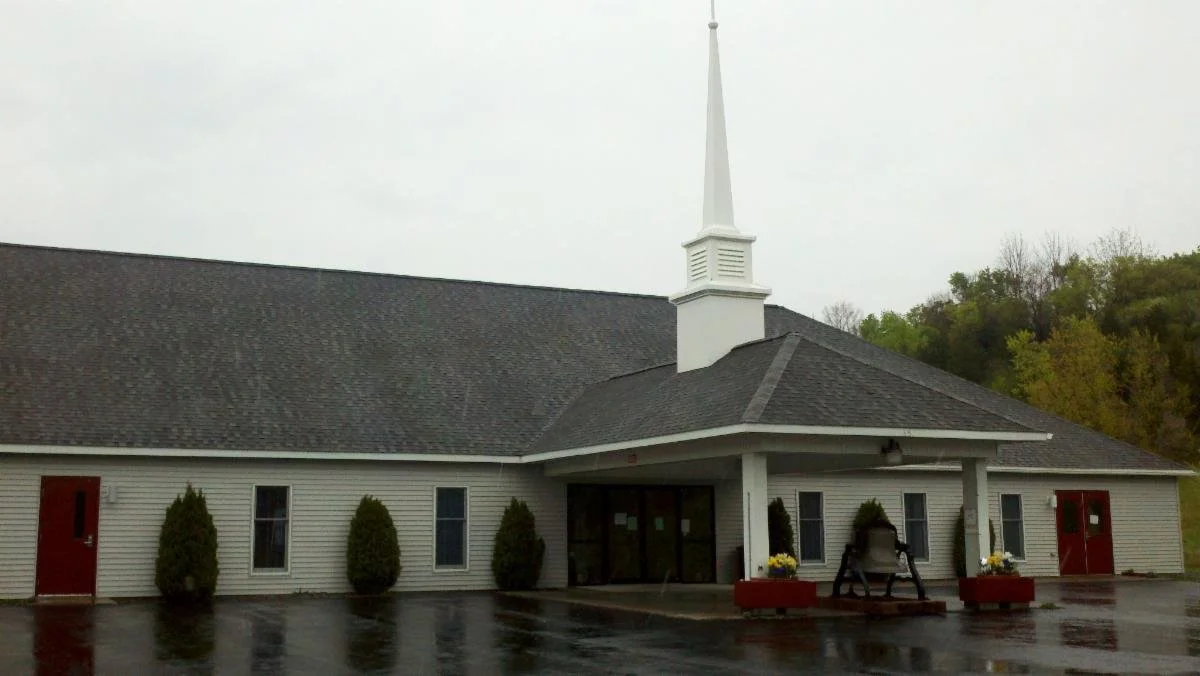
Federated Church of Port Byron
Federated Church of Port Byron
Rooted in History, United in Faith
The Federated Church of Port Byron stands as a living witness to what can happen when two traditions choose unity, shared mission, and faithful perseverance. Formed by the joining of the Presbyterian and Baptist congregations in the village, the church’s story stretches back more than two centuries.
The Presbyterian presence in the Town of Mentz began as early as 1801, with roots that may reach to 1795, when missionaries first gathered people for worship. The First Baptist Church was organized later, in 1831, becoming a vibrant part of the community’s spiritual life.
In 1933, during the hardships of the Great Depression, the two congregations made a bold and hopeful decision: they united as one church, worshiping together in the Main Street building. For decades, that sanctuary held baptisms, weddings, funerals, Sunday School classes, and countless moments of shared faith
Everything changed on Labor Day in 1998, when a devastating storm destroyed the historic Main Street building. Though the loss was profound, the congregation chose once again to move forward together. A new church home was built at the corner of Route 38 and Tex Pultz Parkway, and was dedicated on June 10, 2001.
The new sanctuary carries the memory and spirit of the old. The bell from the former steeple rings again. The pulpit Bible, hymn board, and several pieces of sanctuary furniture were lovingly restored and placed in the new worship space. A wooden cross crafted by the youth group, a renovated baptismal, and a cross fashioned from fragments of stained glass salvaged from the Main Street memorial windows all serve as reminders that God brings continuity even through seasons of loss and rebuilding.
Today, the Federated Church of Port Byron continues to embody the strength, faith, and resilience that have marked its journey from 1801 to the present. Rooted in two traditions and united in one mission, the congregation remains committed to serving Christ and the community with hope and gratitude.
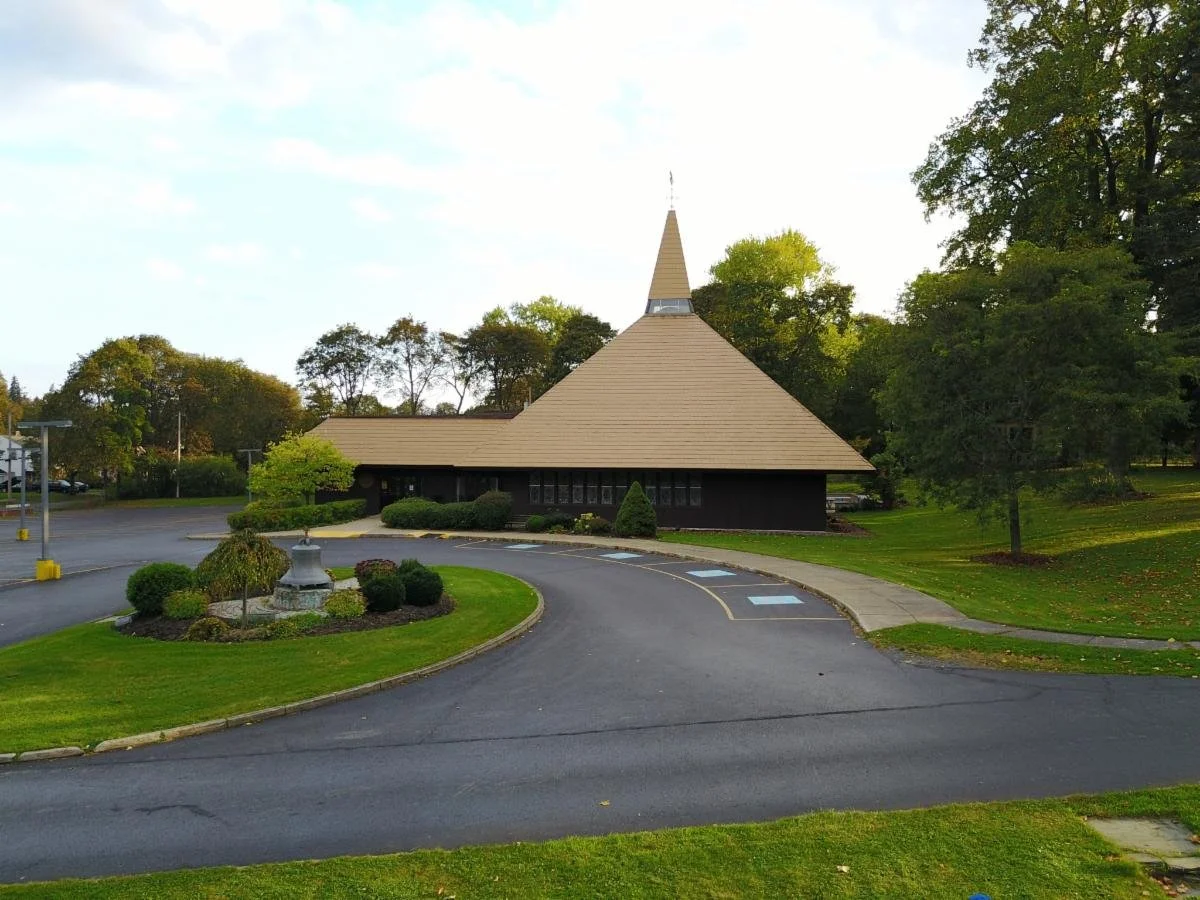
Federated Church of Port Byron
First Presbyterian Church of Auburn
A Legacy of Faith, Resilience and Community Mission
First Presbyterian Church of Auburn has lived many lives in its more than 200‑year history, each chapter marked by faithful innovation and deep commitment to the community.
The congregation’s story begins in 1817, when its first church stood at Franklin and North Streets—the site where the Auburn Declaration of 1837 was signed. As the congregation grew, the building was moved and rebuilt in 1869 as Calvary Presbyterian Church, where its distinctive Corinthian architectural details and evolving sanctuary reflected generations of worship and care.
A turning point came in 1973, when the steeple of the historic limestone church collapsed. Though the organist miraculously survived, the building could not be saved. The congregation relocated to land offered by the Carmelite Fathers next to the Case Mansion, and the new church was completed in 1975.
The church’s mission expanded dramatically when volunteers caring for disabled veterans in the Case Mansion faced losing their home. First Presbyterian stepped in, purchasing the mansion and helping establish what became Unity House, a ministry that grew to serve more than 700 clients a day across several counties.
Today, the church continues this legacy of hospitality and service through the Presbyterian Event & Retreat Center (PERC), approved in 2016. Like Montreat or Stony Point, the PERC offers space for spiritual renewal, community building, and creative ministry—extending the congregation’s long tradition of responding faithfully to the needs of its neighbors.
From its earliest days to its present ministries, First Presbyterian Church of Auburn stands as a testament to resilience, generosity, and a mission shaped by the Holy Spirit.
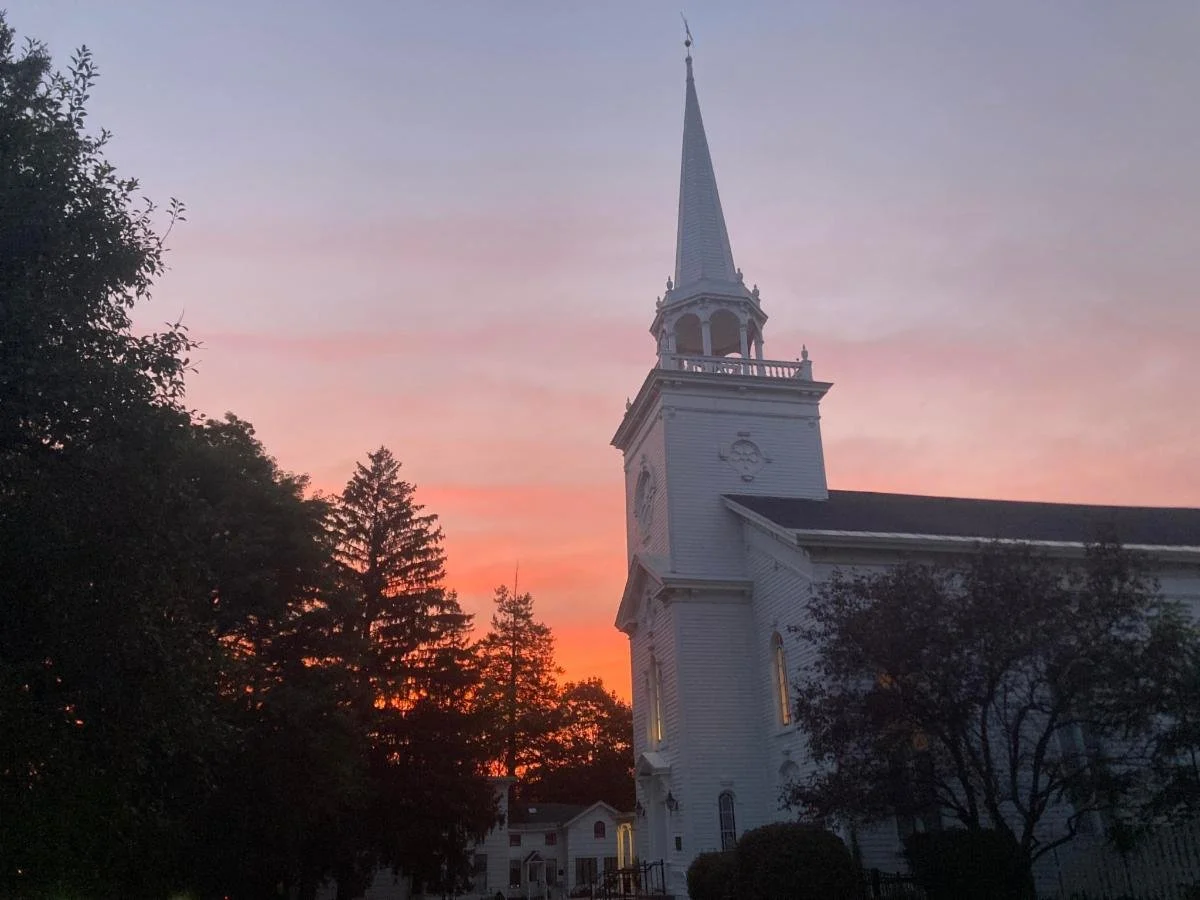
First Presbyterian Church of Cazenovia
Spotlight on the Oldest Church in Cayuga-Syracuse Presbytery
The Cazenovia Church has been a cornerstone of faith and community since 1799, when early settlers—living in what was then still wilderness—gathered to form a congregation and install their first minister, the Rev. Joshua Leonard. Worship began in homes, schoolhouses, and even a tavern before the first Meeting House was built in 1803.
As the village grew, the church grew with it. The building was moved to its current location on the public square in 1828, expanded with a Session House in 1854, and later with the Meeting House wing (1953) and Wendell House (1965). Christian education has always been central, from the first Sunday School in 1818 to the ongoing commitment to children and families today.
Women’s leadership also blossomed over time -- from early service organizations in the 1870s to full participation on Session and the Board of Trustees by the mid‑1950s.
Across more than two centuries, the congregation has navigated familiar challenges -- finances, building care, and partnership with Presbytery -- while remaining a steady, faithful presence in the community.
On May 16, Cazenovia Church graciously hosted both presbyteries, offering hospitality and space for shared worship, discernment, and connection. It was a beautiful continuation of their long tradition of service and welcome.
Cazenovia Church Through the Years
1798 — Community gathers for the first formal congregational meeting; six trustees elected.
1799 — Rev. Joshua Leonard installed as first minister; eight members sign the Covenant and Confession of Faith.
1803 — Congregation votes to build its first Meeting House on the Green.
1828 — Church building moved intact to its current location on the public square.
1854 — Session House (later called the Chapel) constructed.
1869 — Major interior remodel; new windows installed and galleries removed except the choir loft
1870 — Burr and Mrs. Wendell donate the pipe organ.
1870s–1880s — Women’s leadership expands through the Ladies’ Christian Association and Torrey Circle.
1876 — Sunday School enrollment reaches 150 children.
1953 — Meeting House wing added to support Christian education.
1955–1956 — Women added to Session and Board of Trustees.
1965 — Wendell House added for additional program space.
1966 — Director of Religious Education position established.
2026 — Cazenovia Church hosts both presbyteries on May 16, continuing its long tradition of hospitality and leadership
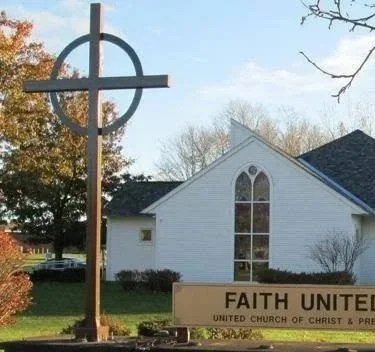
Faith United Church of Oswego
Early Roots: Two Traditions, One Mission
Faith United Church may have been officially formed in 1989, but its story stretches back more than two centuries. What looks like a young congregation in a modern building is, in truth, the heir to a long, intertwined history of Presbyterian and Congregational witness in Oswego.
The story begins in 1801, when the Presbyterian and Congregational denominations created a Plan of Union to coordinate mission work as settlers moved west.
1816: A Presbyterian congregation organized in Oswego, meeting first in a schoolhouse.
1826: The First Presbyterian Church building was dedicated in West Park.
1833: The First Congregational Church of Oswego was established in a building known as The Tabernacle, later used by educator Edward A. Sheldon—founder of the Oswego Normal School, now SUNY Oswego.
Growth, Change, and Community Impact
Throughout the 1800s, Oswego’s churches grew, divided, rebuilt, and reunited—often shaped by the major issues of their day.
1837–1852: A Second Presbyterian Church formed on the east side, took a strong abolitionist stance under Rev. Charles Jones, and later disbanded.
1841: First Presbyterian’s building was destroyed by arson, leading the congregation to worship temporarily at The Tabernacle.
1857–1859: A new Congregational Church was organized and dedicated at E. Fourth and Oneida Streets.
1872: Grace Presbyterian Church formed after another split from First Presbyterian.
By the early 20th century, the landscape began to shift again.
1936: First Presbyterian and Grace Presbyterian reunited, worshiping in the Grace Church building.
1934–1960: National denominational mergers shaped the Congregational and UCC traditions.
1983: The northern and southern branches of the Presbyterian Church reunited.
A New Chapter: Becoming Faith United
The path toward union in Oswego began in the 1980s.
1987: The United Church of Christ, Congregational of Oswego sold its building and entered a yoked parish with the Presbyterian Church of Oswego.
1989: The two congregations formally consolidated to become Faith United Church.
1993: The former Presbyterian (Grace) building was sold to Oswego Hospital.
1996: Faith United dedicated its new building on Mark Fitzgibbons Drive.
Faith United Today
Faith United continues to grow into its identity as a community‑minded, justice‑oriented congregation.
2023: The church established a Community Garden, open to the entire Oswego community.
2024: Faith United approved a covenantal statement to officially become an Open and Affirming congregation.
Across two centuries, through fires, mergers, new beginnings, and bold commitments, Faith United Church has remained rooted in the gospel and engaged with the needs of its community. Its history is long, but its mission continues to unfold with hope and purpose.
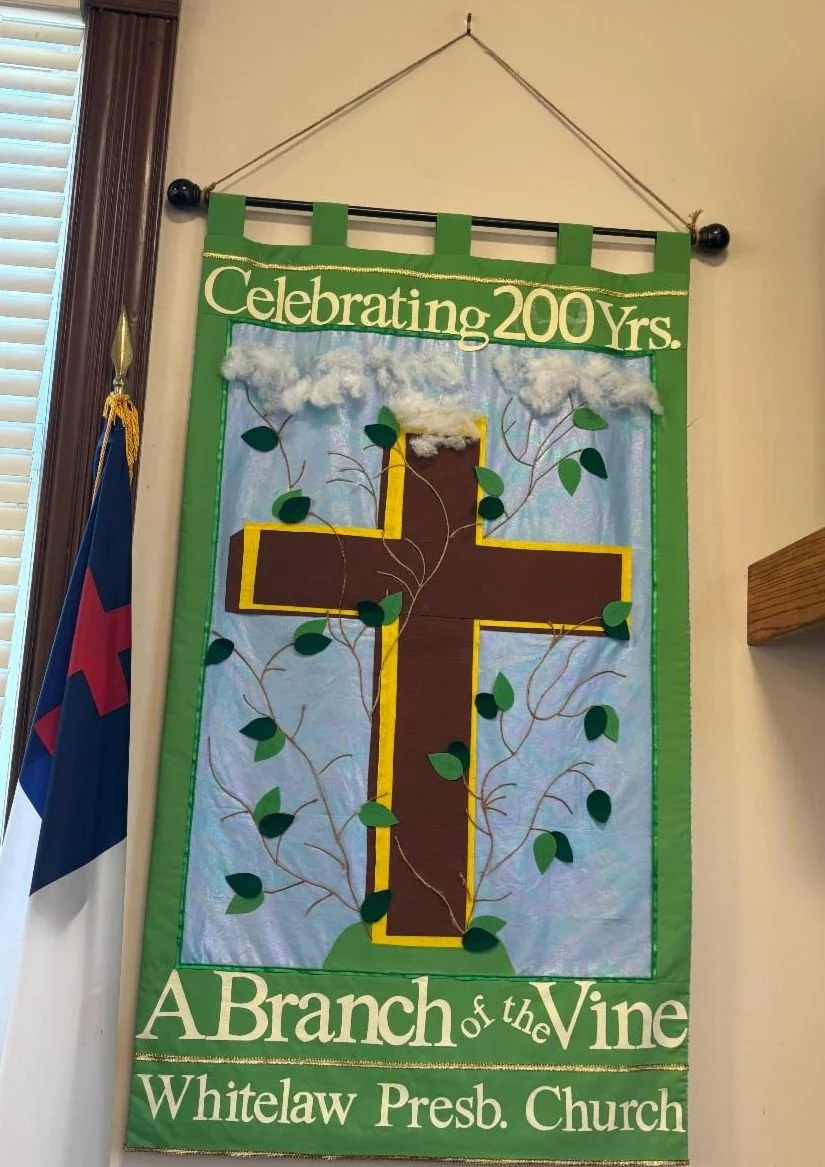
Whitelaw Presbyterian Church
Celebrating 200 Years of Faithfulness
Honoring Donna Chapman’s Final Sunday of Service
June 28 was a day filled with gratitude, memory, and hope as Whitelaw Presbyterian Church celebrated its 200th anniversary and recognized Donna Chapman on her final Sunday of service. For this small but close‑knit community, the morning carried both the weight of history and the tenderness of transition.
Donna’s Liturgy and Loving Presence
Although Donna was unable to attend due to illness, her presence was felt throughout the service.
She prepared a beautiful liturgy that honored Whitelaw’s long legacy of faithfulness to its community — a gift shaped from her sixteen years of devoted ministry.
Her words guided the congregation through worship that remembered the past with thanksgiving and looked toward the future with trust.
Reflections from Three Pastors:
Three pastors offered reflections that highlighted Whitelaw’s story across generations.
Lay Pastor Steve Stokes
Steve, who grew up in the church, shared heart‑warming stories of pastors who shaped his life and faith. His memories reminded everyone of the deep roots that anchor this congregation.
Rev. Earl Arnold
Rev. Arnold, who served Whitelaw for three years, spoke of the congregation’s resilience, strength, and unmistakable sense of fun — qualities that have carried them through challenges and celebrations alike.
Rev. Dennis Dorr
Rev. Dorr, honorably retired from Chittenango Presbyterian Church and a longtime friend of the congregation, encouraged everyone to look ahead with hope.
United Ministry of Aurora
A Living Legacy of Faith and Welcome in Aurora
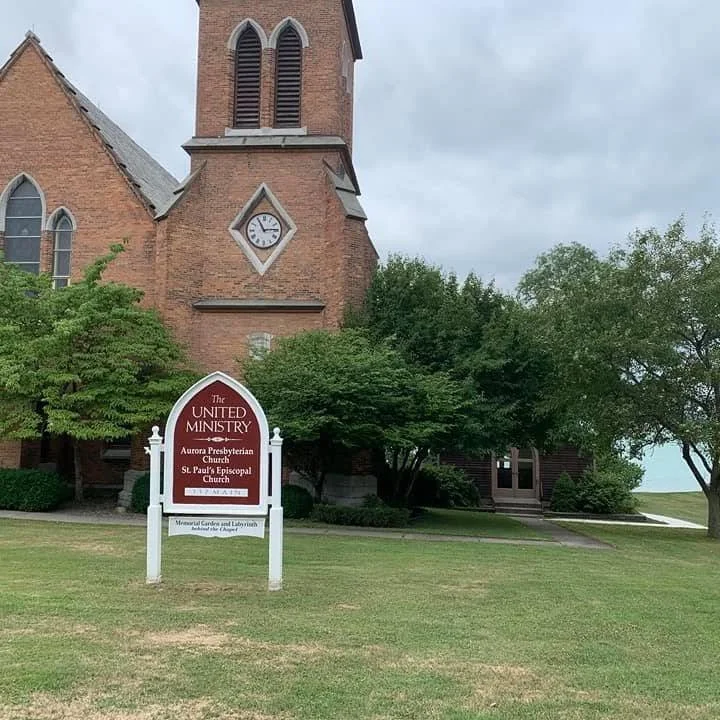
The United Ministry of Aurora (UMA) worships in a beautiful English Gothic sanctuary built in 1860 by the Aurora Presbyterian congregation. The Presbyterians, first organized in 1811, replaced their original wooden church with the current brick and limestone structure designed by Joseph C. Wells and built by local master builder Samuel D. Mandell. Its stained glass windows -- some from Munich and others crafted in Buffalo -- were famously installed “by moonlight” the night before the church’s dedication.
In 1969, St. Paul’s Episcopal parish joined the Presbyterians, bringing three stained glass windows and three bells that now hang in the tower, forming a perfect chord with the original “G” bell.
Rev. Dr. Barbara Bloom, a UCC minister, has served UMA for six years. The congregation is an eclectic, open and embracing community of questioners, seekers and believers. UMA follows the teachings of Jesus, understanding that loving God means loving each other and all creation. The church is committed to service, addressing systemic injustice, and caring for the least fortunate in the community and beyond.
The 19th‑century sanctuary sits along Cayuga Lake, accompanied by a social hall, playground, labyrinth, chapel, and Memorial Garden -- spaces that reflect UMA’s longstanding commitment to hospitality. The Memorial Chapel of the Nativity, gifted in 1978, houses an antique Italian creche displayed each Christmas. The Memorial Garden, established in 2005, includes a labyrinth, columbarium, and amphitheater, with interment available to anyone.
UMA continues to value gathering in person, recognizing that shared presence -- seeing one another, laughing, and building community -- is central to its life together.